
Painful haemorrhoids: causes, types and relief
Have you ever seen or felt a small lump in or around your bottom, especially after using the toilet? If so, it might be what’s known as a haemorrhoid – a swollen cluster of veins that form around your anus or in the lower part of your rectum.
Otherwise known as piles, haemorrhoids are a very common condition worldwide. In the UK alone, they’re estimated to affect between 13% and 36% of the population.
Haemorrhoids also vary in type, size and severity, and can potentially cause some people to experience painful symptoms. So why does this happen?
What are piles?
Piles, or haemorrhoids, are swellings containing enlarged blood vessels that are found either inside or around your bottom (rectum and anus). They can vary in size and colour – ranging from small, pink lumps the size of a pea to larger, purple lumps the size of a grape.
Which symptoms do piles cause?
While some people may not experience symptoms at all, others may find that they experience itching and sometimes pain.
One of the most common signs of haemorrhoids is seeing bright red blood in the toilet bowl or on toilet paper after having a poo.
Some other common symptoms of haemorrhoids include:
- Feeling like you still need to poo even after going to the toilet
- Mucus in your underwear or on toilet paper after wiping your bottom
- Finding lumps around your anus
Piles can often get better on their own after a few days, but it’s important to speak to your doctor if you find that you keep getting them or experience painful symptoms.
Are there different types of piles?
Depending on where they form, you may hear haemorrhoids being described as either internal or external. So, what’s the difference?
As the names suggest, internal haemorrhoids develop inside your body within the upper two-thirds of your anal canal, while external haemorrhoids form in the lower third of your anal canal, closest to your anus.
Internal haemorrhoids aren’t usually painful unless they’ve prolapsed (bulge outwards from your bottom). This is because there are no pain-sensitive nerve fibres in the upper part of your anal canal (where they form).
For this reason, internal haemorrhoids normally don’t cause pain. Instead, they’re more commonly associated with bright red blood visible in the toilet after you have a poo.
External haemorrhoids, by contrast, develop in the lower part of the anal canal, where they are more sensitive due to a higher number of nerve endings. These can carry pain signals and often result in symptoms including pain and itching.
Why are my piles painful?
If you find that your piles are causing you pain, it’s likely you have external haemorrhoids. This is because external haemorrhoids become covered by an epithelium (a layer of tissue) which contains a high density of nerve endings.
With external haemorrhoids, you may have anal pain, especially when sitting, or notice that too much straining, rubbing or cleaning around your anus makes your symptoms worse.
While uncommon, it’s also possible for external haemorrhoids to develop blood clots within the haemorrhoid itself (known as a thrombosed haemorrhoid), which can cause swelling and severe pain. If you are concerned about your symptoms, it’s important to seek medical advice as soon as possible.
How to relieve painful piles
If you’re currently living with the discomfort of piles, there are plenty of effective ways to help relieve your symptoms.
For example, there are several types of creams, ointments and suppositories (which are inserted into your bottom) available from pharmacies and supermarkets to relieve swelling and discomfort.
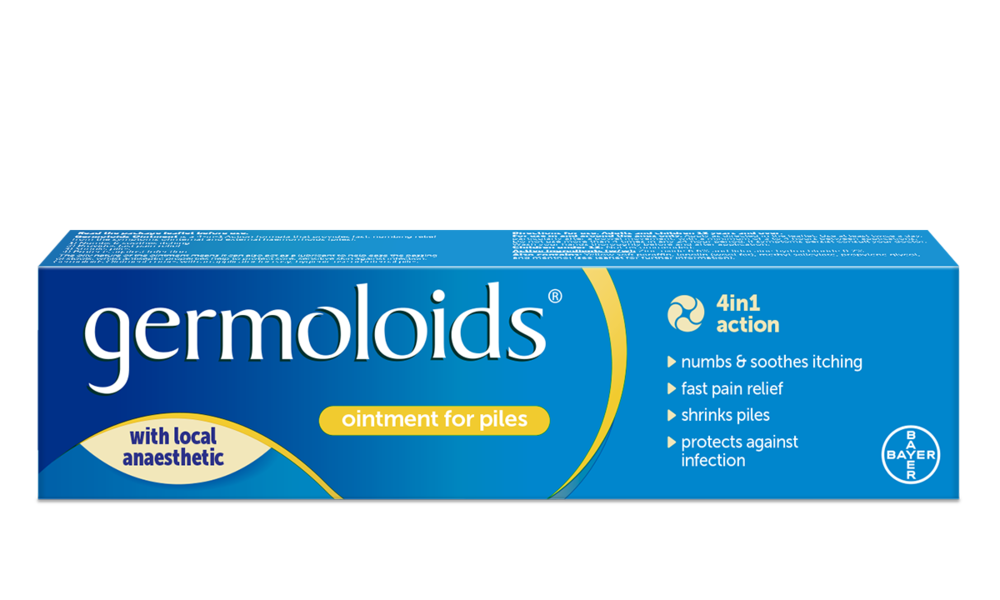
The Germoloids® range of treatments, for example, are designed to provide numbing relief from the painful symptoms of haemorrhoids, such as pain, swelling, irritation and itching.
However, if you find that your symptoms aren’t improving after seven days of treatment at home, you should speak to your doctor. After discussing your symptoms with you and potentially performing a simple examination, they’ll be able to identify the best type of treatment for your needs.
If you experience rectal bleeding, continually suffer from piles or have severe piles, it is important to seek medical advice.
Helping to prevent painful piles
While the exact cause of haemorrhoids remains unclear, many cases are thought to result from straining on the toilet due to constipation. As such, various dietary and lifestyle factors can play a part in your risk of developing them.
Here are some useful tips to help prevent piles from appearing or coming back. These tips are intended to prevent constipation as straining when going to the toilet is one of the causes piles.
- Eat plenty of fibre – prioritise foods like fruits, vegetables, cereals, wholegrain rice pasta and bread, or ask your pharmacist about fibre supplements if a high-fibre diet with plenty of fluids isn't providing sufficient help
- Think about what you drink – aim to drink lots of water to keep hydrated and avoid having too much alcohol or caffeine
- Avoid certain medications – some medicines can cause constipation as a side effect, so make sure to ask your pharmacist or doctor before taking anything you’re unsure about
- Exercise regularly – being overweight can increase your risk of developing piles. Exercise can help lower your weight and reduce your likelihood of constipation
- Think about how you poo – while on the toilet, don’t push too hard or spend longer than you need in there
How to manage and treat piles
Here are some useful tips to help manage piles when they appear:
- After visiting the toilet, wipe your bottom with damp toilet paper
- Keep your bottom as clean and dry as possible
- Do not push too hard when pooing
- Don’t wipe your bottom too hard after you poo
- Take paracetamol if piles hurt
- Take a warm bath to ease itching and pain
- Use an ice pack wrapped in a towel to ease discomfort
- Gently push a pile back inside
- Don’t ignore the urge to poo
- Do not spend more time than you need to on the toilet
You can also ask a pharmacist about treatment for piles. They might suggest creams to ease the pain, itching and swelling, or treatment to help constipation and soften poo.
Want to learn more about haemorrhoids? From the symptoms they cause to the lifestyle changes you can make, our tips and advice page is packed with articles to help you manage and prevent haemorrhoids more easily.